What Safe and Tidy Tree Removal Should Look Like
Taking down a tree is not a gardening job with a chainsaw attached. It is a safety job that happens to involve a garden. Timber weighs far more than it looks, a single limb can crush a fence or a roof, and the work often takes place close to buildings, driveways and power lines.
That is why the way a crew works matters as much as the price they quote. This guide explains what proper tree removal in Perth involves, from deciding whether a tree really needs to come down through to permissions, the removal itself and what your yard should look like when the crew drives away. Use it to judge a quote before you say yes.
What Safe, Tidy Tree Removal Actually Looks Like
The standard to look for is safe, tidy tree removal handled by a crew who cleans up after themselves. It sounds like a low bar, but it covers a lot of small professional habits that separate a good job from a stressful one.
A safe job starts before the first cut. The crew looks at the tree, the surrounding structures and the access, works out where each section will land, and sets up an exclusion zone so nobody wanders underneath. A tidy job ends with the site cleared: branches removed or chipped, sawdust raked, and paving and lawn left in the condition they were found. If a quote says nothing about clean-up, ask, because it is one of the easiest places for misunderstandings to creep in.
When a Tree Should Come Down
Not every tree that looks untidy needs to go. Removal usually makes sense when:
- The tree is dead, dying or structurally unsound.
- Storm damage has left large split limbs or a damaged trunk.
- It leans sharply toward a house, fence or path, especially if the lean is new.
- Roots are lifting paving, damaging pipes or threatening foundations.
- It is too close to buildings or power lines to be managed safely by pruning.
- A pest or disease problem means the tree cannot be saved.
An assessment from a qualified arborist can tell you whether pruning will do the job or whether the tree has to come out.
One Perth-specific concern deserves a mention. The polyphagous shot-hole borer, a tiny wood-boring beetle first detected near Perth in 2021, has led the Department of Primary Industries and Regional Development (DPIRD) to place the whole metropolitan area under a quarantine area notice. Restrictions apply to moving green waste, unseasoned wood and mulch larger than 2.5 cm in diameter. If you notice small entry holes, sawdust-like material or dieback on a susceptible tree, report it to DPIRD, and check its shot-hole borer page for the current rules, since they have been changing.
Permissions to Check Before Anyone Cuts
Western Australia has no single statewide rule covering every tree on private land, so the answer depends on your council. Many Perth councils now use local planning policies that require approval before a regulated or significant tree is removed or damaged. The City of South Perth, for example, adopted a tree retention policy in August 2025 that requires development approval to remove a regulated tree, as its trees on private property page explains. Definitions differ from council to council, so a tree you can remove freely in one suburb might need an application in the next.
Trees on the verge are a separate matter. They generally belong to the council, so do not remove or prune them yourself. Work near power lines is another special case, so ask any crew how they handle it and whether the network operator needs to be involved. Some properties also carry bushfire or environmental rules, which your council can confirm.
The safest habit is to phone your council before you book. A reputable crew will usually ask whether you have checked.
How a Professional Removal Works
The details vary with the tree and the site, but a well-run removal generally follows the same sequence.
- Assessment: The crew inspects the tree, checks for decay, hazards and nearby structures, and works out how the tree will be taken down.
- Set-up: An exclusion zone is marked out, valuable items are moved or protected, and access for equipment is planned.
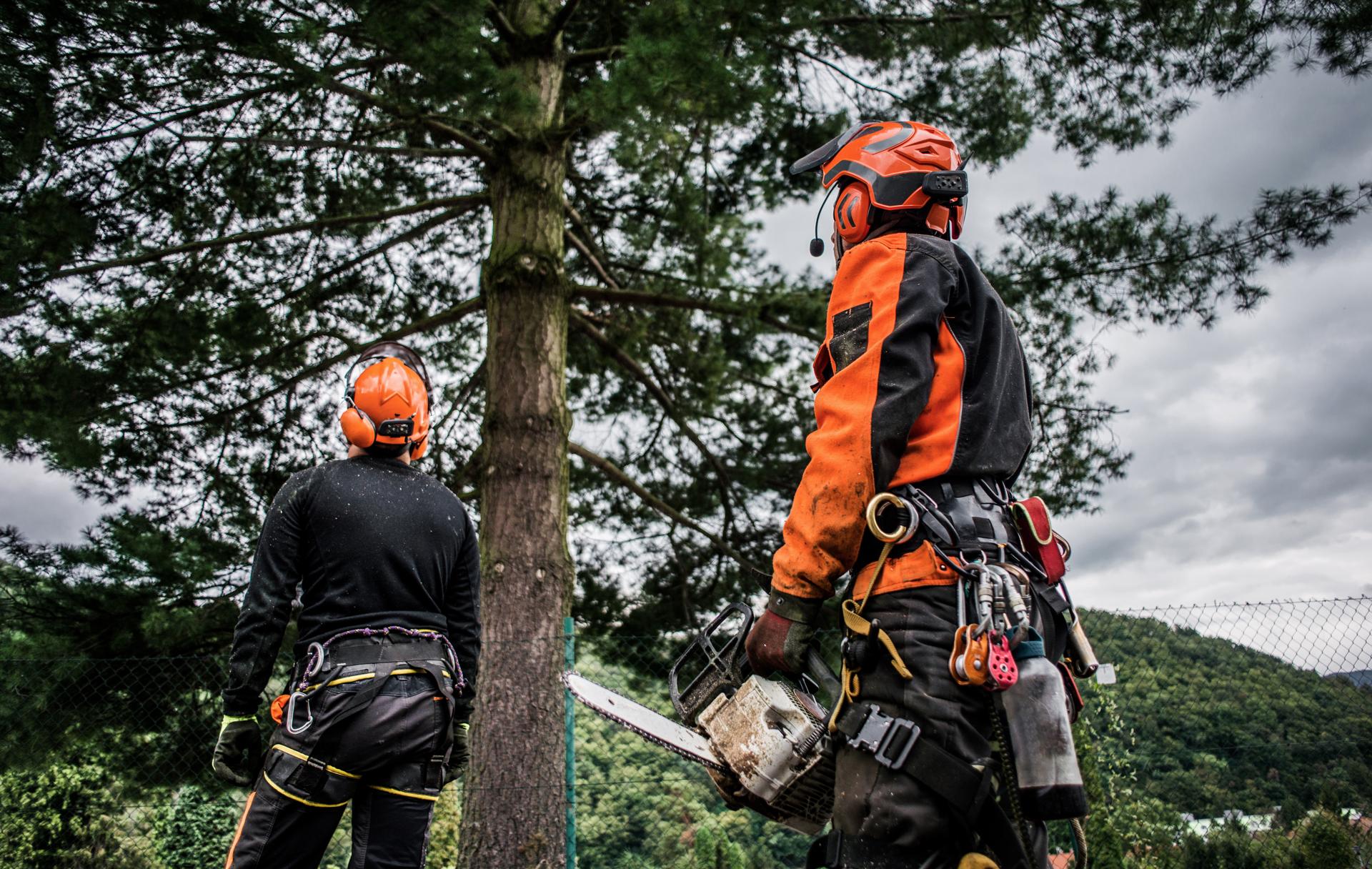
- Access: Depending on the tree, crew members climb it or work from an elevated platform, wearing protective gear and using ropes and safety systems.
- Dismantling: In tight spaces the tree is usually taken down in sections, with each piece lowered under control rather than dropped.
- Processing: Timber is cut, and branches are fed through a chipper or loaded for removal.
- Clean-up: The site is cleared and checked before the crew leaves.
A felled-in-one-piece approach is only suitable where there is plenty of clear space, which is rare in suburban yards.
Clean-Up, Chipping and Stump Options
A tidy finish covers more than picking up the big pieces. Branches should be chipped or taken away, sawdust and small debris raked or blown clear, and paving, lawn and garden beds left in the state they were found. Agree in advance whether the timber stays for firewood or mulch, or leaves with the crew.
With the shot-hole borer restrictions in place, it is also worth asking where the green waste ends up. DPIRD-approved green waste sites are set up to handle plant material under the quarantine rules.
The stump is the other decision. It can be ground down below the surface so you can replant or lay lawn, or left in place. Stump grinding is often quoted separately, so check whether it is included.
Why This Is Not a DIY Job
Large trees are unforgiving. Limbs can be heavy, tension in a leaning trunk can release without warning, and decay is often hidden inside. Add ladders, chainsaws and nearby power lines, and the risk to both you and your property goes up quickly. Small shrubs are one thing, but for anything you cannot safely reach from the ground, a trained crew with the right equipment and insurance is the sensible choice.
Questions to Ask Before You Hire
A few questions will tell you a lot about how a crew works.
Are you insured? Ask to see a current certificate of insurance. If something goes wrong, you want cover in place for the crew and your property.
Who will assess the tree, and what experience do they have? Ask about the qualifications and experience of the person who will run the job, especially for large or awkward trees.
Is the quote in writing, and what does it include? It should say whether clean-up, waste removal and stump grinding are included.
How do you protect the site? Listen for talk of exclusion zones, ground protection and how they will deal with nearby structures and power lines.
Where does the green waste go? With the current borer restrictions, a good crew should have a clear answer.
What Affects the Cost
No two quotes are identical because no two trees are. The main factors are the size and species of the tree, how easy it is to reach, hazards such as nearby buildings or power lines, whether a stump needs grinding, and how much waste there is to remove. Be wary of a price that seems far below the others, since it may leave out clean-up or cut corners on safety.
Frequently Asked Questions
Do I need council approval to remove a tree in Perth?
It depends on your council and the tree. There is no single statewide rule, and many councils regulate significant trees on private land, so contact yours before any work begins.
Should I remove the stump as well?
If you plan to replant or lay lawn, grinding the stump makes that easier. If not, it can be left in place. Stump grinding is often quoted separately, so ask.
What happens to the branches and waste?
A professional crew will typically chip or remove them. Because of shot-hole borer rules in the Perth area, ask specifically how green waste is handled and disposed of.
Can I remove a tree on my verge myself?
Generally not. Verge trees usually belong to the council, so contact it instead of cutting them yourself.
Final Thoughts
Good tree removal is quiet, careful and complete. The crew assesses the job, protects your property, works safely and leaves the yard clear. Check what your council requires, ask the right questions, and choose a crew that treats a tidy finish as part of the job rather than an extra.